
A major concern for anyone considering Chapter 7 bankruptcy is whether they will lose their property. Stories circulate about people losing everything, but this is rarely true in consumer cases. In fact, most Chapter 7 filings are what’s known as no-asset cases, meaning the filer keeps all their property because it is protected under exemption laws. To understand why, it helps to know how assets are evaluated in Chapter 7 and how exemptions work. This guide explains the process in clear terms so filers know what to expect.
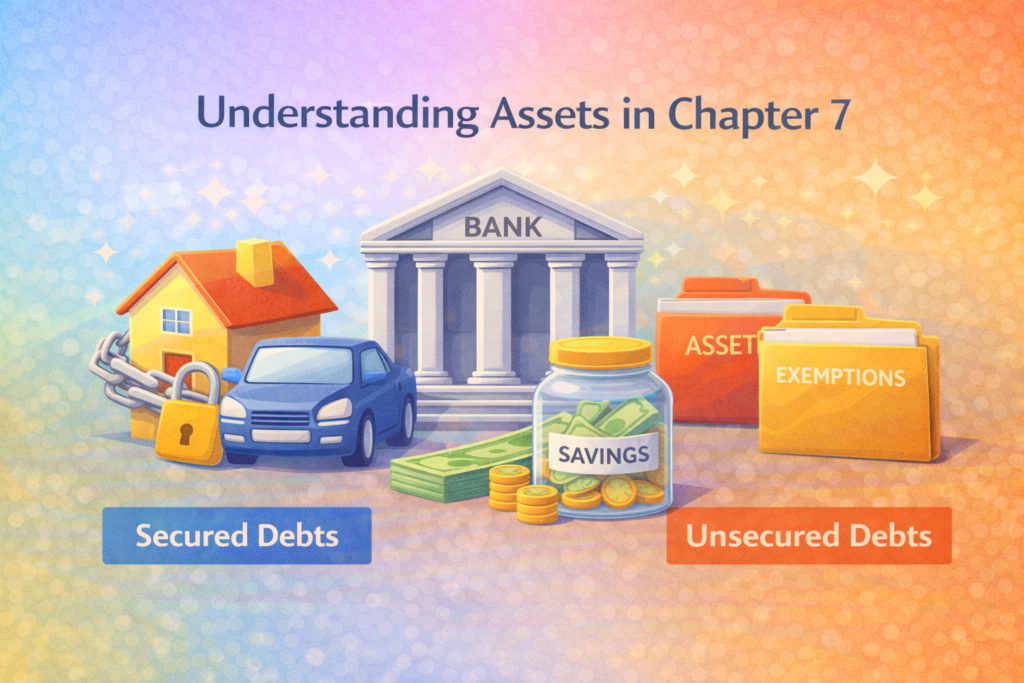
An asset is anything you own, have an interest in, or may become entitled to. Assets include obvious items like homes, vehicles, and bank accounts, but also less obvious items such as:
Even if something seems minor or of low value, it must be disclosed. Transparency is essential. The trustee—not the filer—decides what has value and what is exempt.
Exemption laws exist to protect certain property from being taken by the trustee. The goal of exemptions is to allow filers to maintain a basic standard of living. Without exemptions, bankruptcy would be punitive. Instead, exemptions ensure people keep essential property such as:
Exemption rules vary by state. Some states allow filers to choose between state and federal exemptions, while others require the use of state-specific rules. Exemptions also sometimes include wildcard provisions that can be applied flexibly to protect additional property.
Once the Chapter 7 case is filed, all property becomes part of a temporary entity called the bankruptcy estate. The trustee reviews the estate to determine whether any property is non-exempt and could be sold for the benefit of creditors.
The trustee evaluates:
If selling an item would not yield enough money after costs and exemptions, the trustee usually abandons it, allowing the filer to keep it.
When listing assets, the filer must use fair market value—not the original purchase price. Fair market value means what the item could reasonably sell for today, used, in its current condition. This often surprises people because many personal items depreciate quickly.
For example:
Because values drop significantly over time, exemptions usually cover the property fully.
A home is often the largest asset people own. Home equity is determined by subtracting the mortgage balance from the market value. If the equity falls within the exemption limit, the filer can usually keep the home as long as mortgage payments remain current.
If equity exceeds the exemption, the trustee must determine whether selling the home would benefit creditors. Because selling a home involves costs—agent fees, taxes, title work—the trustee only pursues liquidation if there is meaningful equity after exemptions and expenses.
Most homeowners fall under the exemption threshold, especially in areas with moderate property values.
Vehicles are another common asset category. Their value depends on age, mileage, and condition. If a car is financed, equity is calculated by subtracting the loan balance from the current value.
If the equity is below the exemption limit, the filer can usually keep the car. If payments are current, the lender typically allows the filer to retain the vehicle. If payments are behind, the lender may require catch-up payments or may repossess the vehicle even if bankruptcy is filed.
If a vehicle is owned free and clear but its value exceeds the exemption, the trustee may consider selling it unless wildcard exemptions can cover the difference.
Non-exempt assets are items that exceed exemption limits or do not fall into protected categories. Examples may include:
If the trustee identifies non-exempt property, they may choose to sell it. However, they must first determine whether liquidation would realistically produce enough money to benefit creditors. Many trustees decline to pursue assets if the net proceeds would be minimal.
Most retirement accounts, including 401(k)s, IRAs, and pensions, are protected under both federal law and state exemptions. These accounts generally cannot be seized by the trustee. Withdrawing retirement funds before filing is usually a mistake because it converts protected assets into unprotected cash.
Keeping retirement accounts intact is almost always the best approach.
Legal claims—such as personal injury cases, workers’ compensation claims, or insurance settlements—are considered assets, even if the money has not yet been received. The trustee may take an interest in these claims and could administer the proceeds if they are not exempt.
If the filer is involved in a legal claim, it must be disclosed fully. Failing to list a claim can lead to serious complications and may prevent recovery in the lawsuit later.
Tax refunds are treated as assets and must be disclosed. A pending or expected refund may be partially or fully non-exempt depending on state law and timing.
Income earned after filing, however, generally does not become part of the bankruptcy estate in Chapter 7, with the exception of certain types of windfalls received within 180 days, such as inheritances or life insurance proceeds.
In the majority of Chapter 7 filings, exemptions cover all or nearly all property. Most people filing bankruptcy do not have significant non-exempt assets. Trustees are practical and will not spend time administering an asset if the process would not yield meaningful distributions to creditors.
As a result, most Chapter 7 cases proceed with no liquidation of property at all.
One of the most important things a filer can do is disclose everything. The trustee cannot evaluate or exempt assets that are hidden or omitted. Complete transparency ensures:
Hiding assets is not worth the risk and can lead to denial of discharge or legal consequences. Accurate disclosure is always the safest choice.
Chapter 7 bankruptcy is designed to give individuals a fresh start, not leave them without essential property. Most assets are protected through exemptions, and most cases do not involve liquidation. Understanding how assets are valued, reviewed, and exempted helps filers approach bankruptcy with clarity and confidence. By disclosing everything and applying exemptions properly, individuals can keep their property while eliminating overwhelming unsecured debt.