
A major part of understanding Chapter 7 bankruptcy involves knowing how different types of debt are treated. Not all debts behave the same way, and bankruptcy law separates them into categories that determine what happens when a case is filed. The two primary categories are secured debts and unsecured debts. Each category plays a distinct role in the bankruptcy process and can affect eligibility, property rights, and discharge outcomes. This guide explains the differences and how each is handled in a standard Chapter 7 case.
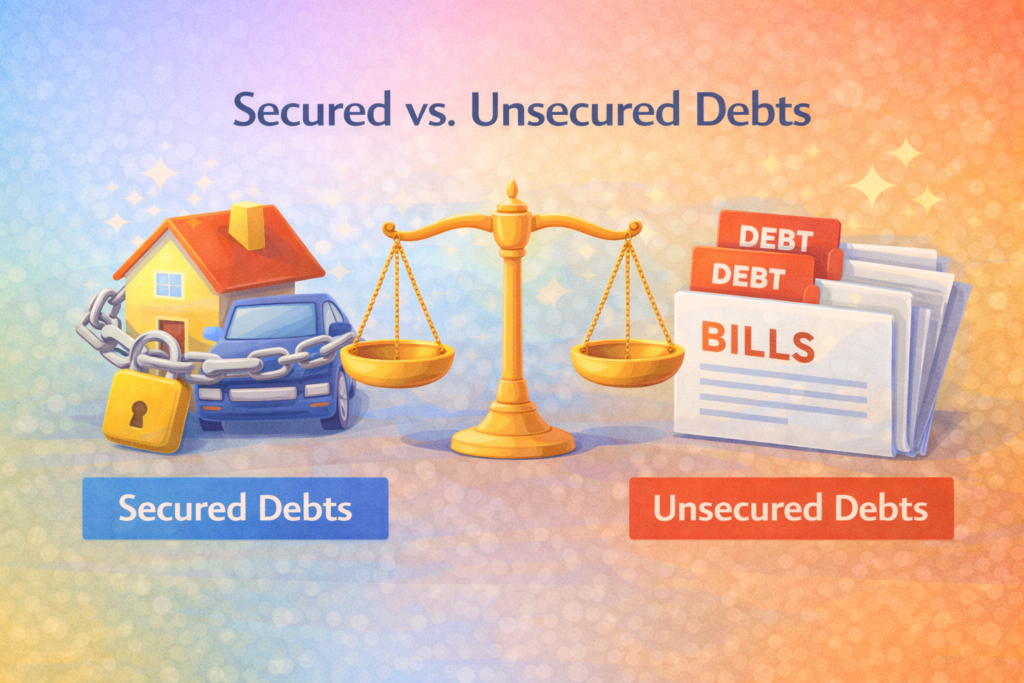
Secured debts are obligations that are tied to specific property, known as collateral. When a borrower takes on a secured loan, the lender retains a legal interest in the collateral until the debt is fully repaid. If the borrower defaults, the lender has the right to repossess or foreclose on the property to recover the value of the loan.
Common examples of secured debts include:
The presence of collateral distinguishes secured debts from other types of financial obligations.
Chapter 7 bankruptcy does not eliminate the lender’s lien on the collateral. Even if the personal obligation to pay the debt is discharged, the lender’s right to repossess the property remains unless payments are kept current. This means that if the filer wants to keep a home or vehicle, they must continue making payments or negotiate an agreement with the creditor.
The filer may choose among several options for secured debts:
Surrendering the property allows the filer to walk away from the debt completely, even if the collateral’s value is less than the amount owed.
Some lenders require reaffirmation agreements if the filer wants to keep the property. A reaffirmation agreement is a legal contract stating that the filer will continue paying the debt despite the bankruptcy. This agreement must be approved by the court and may not always be in the filer’s best interest.
Reaffirmation agreements carry risks. If the filer later defaults, the lender can still repossess the property and pursue the filer for any remaining balance. Carefully considering whether reaffirmation is necessary is an important part of the decision-making process.
Unsecured debts have no collateral attached to them. The creditor cannot automatically seize property if the borrower stops paying. These debts rely solely on the borrower’s promise to repay.
Common examples include:
Because unsecured debts are not tied to specific property, they are often the primary focus of Chapter 7 bankruptcy.
Unsecured debts are typically discharged in Chapter 7. Once the discharge is granted, the filer is no longer legally responsible for paying them. Creditors must stop all collection efforts, and the debt is permanently eliminated.
Some unsecured debts, however, are considered non-dischargeable. These include:
These types of debts remain even after bankruptcy but must still be listed in the filing.
Among unsecured debts, some are classified as priority debts. These debts receive special treatment under bankruptcy law and are paid first if any funds become available through asset liquidation.
Examples of priority debts include:
Even though priority debts may survive the discharge, they must be disclosed. If the trustee liquidates any assets, the funds will be applied to priority debts first.
Understanding whether a debt is secured or unsecured affects several aspects of Chapter 7:
Someone who is behind on mortgage or auto payments may find Chapter 13 more helpful because it allows repayment over time. Meanwhile, individuals overwhelmed by credit card or medical debt may receive more immediate relief from Chapter 7.
The type and amount of debt can also influence eligibility for Chapter 7 through the means test. High levels of unsecured debt do not prevent filing. However, if the filer has significant disposable income that could be used to repay creditors under a structured plan, the court may question whether Chapter 7 is appropriate.
Conversely, someone struggling primarily with secured debt arrears may find that Chapter 7 does not address their core challenge, even if they qualify based on income.
For individuals with secured debt, deciding whether to keep or surrender property is a major consideration. Some may choose to surrender a vehicle that requires expensive repairs or has high monthly payments. Others may decide to keep a home if they are current on payments and wish to avoid foreclosure.
Understanding the options helps individuals make informed decisions aligned with their financial goals.
Co-signed debts have unique implications in Chapter 7. If a co-signed debt is discharged for the filer, the co-signer may still be responsible for the full amount. This can strain personal relationships if the co-signer is unaware of the bankruptcy or unprepared for repayment.
While Chapter 13 offers certain protections for co-signers, Chapter 7 does not. Co-signed debts must be listed and disclosed, and consideration must be given to how the discharge affects all parties involved.
Once a Chapter 7 case is filed, the automatic stay stops collection efforts on both secured and unsecured debts. However, the stay is temporary for secured creditors. If the filer falls behind on payments, a secured creditor can ask the court to lift the stay and resume repossession or foreclosure efforts.
Unsecured creditors cannot collect once the stay is in place and generally do not receive repayment in a no-asset case. After the discharge, unsecured creditors have no further legal recourse.
Understanding the distinction between secured and unsecured debts provides clarity about what Chapter 7 can and cannot accomplish. Unsecured debts are usually discharged, offering significant relief. Secured debts require more strategic decisions about property and payments. By recognizing how each category is treated, filers can better navigate the bankruptcy process and make decisions that support long-term financial stability.